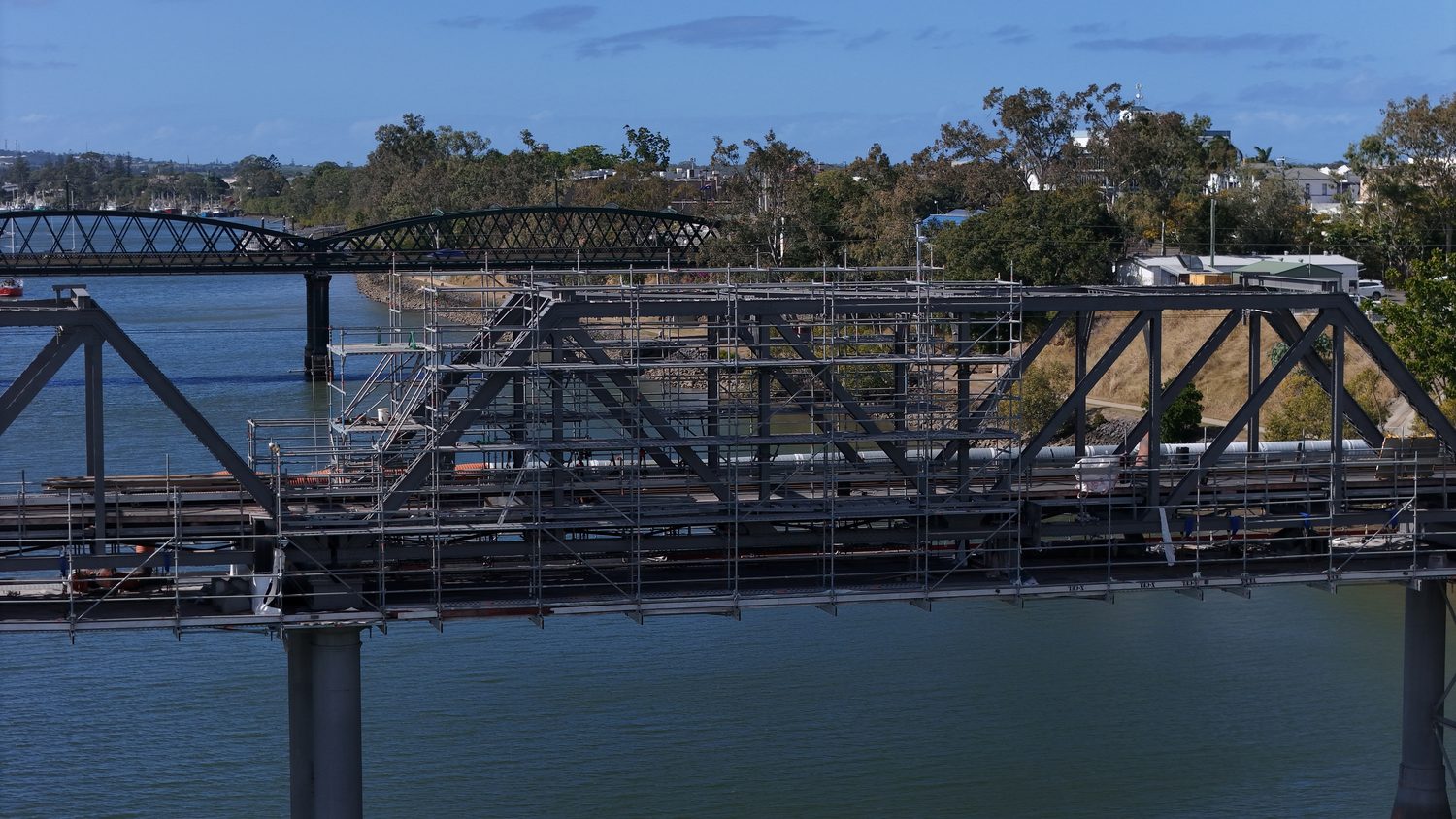
Defects liability period inspection: Burnett River rail bridge
A remediation contractor needed a defects liability period record of a repainted rail bridge at Bundaberg, inside a single day with the line closed for the flights. Hover mobilised from Brisbane, captured every mark as a wide and tele pair, and the contractor reviewed the register with its own note on each item it kept.
- Asset
- Burnett River rail bridge, Bundaberg (Wide Bay)
- Client
- Remediation contractor
- Service
- Close visual inspection: defects liability period record
- Window
- Same-day regional mobilisation; line closed for the flights
- Deliverables
- Itemised marks register (PDF) with paired wide and tele frames, located by span and side
A record of the repainted steelwork for the defects liability period
The contractor responsible for the coating needed a documented condition record for the defects liability period: every mark on the new coating, where it sat, and what it looked like.
Hover had already worked on this bridge, filming and running a live inspection of the painting works across three days of a scheduled track closure, so the structure and the corridor were known. The defects record was a second, shorter engagement: one capture day inside the contractor's window.
A rail corridor, a regional mobilisation and one day to do it
The bridge sits in a live Queensland Rail corridor at Bundaberg, a regional mobilisation from the Brisbane base. The council drone permit and the Queensland Rail flight request were arranged ahead of travel, and the line was closed for the duration of the flights. The job was priced as a single fixed price with the travel built in, flown and returned the same day, the way every regional job is scoped.
Every mark as a wide and tele pair, located by span and side
Hover flew the spans from a safe standoff with no rope access or EWP. Each mark on the coating was captured twice from the same hover position: a wide context frame showing where it sits on the structure, and a tele detail frame showing what is there. Every item was then located by span number and side of the bridge.
Descriptions stayed descriptive. The register says what is visible in the frame and nothing about cause or severity: a mark is a mark until the person responsible for the coating says otherwise. That is the house rule on every close visual inspection, and it is what keeps the register usable as evidence.
What was delivered
- An itemised marks register as a PDF: ID, location by span and side, plain description, and the paired wide and tele frames for every item
- A location plan with the spans marked and each item numbered
- A revised issue after the contractor's review, carrying the contractor's own note against each item it kept
A register the contractor could act on
The contractor went through the first issue mark by mark, kept the items that warranted action and set aside the ones that were dirt, droppings or staining from the track assembly, with its own note recorded against each retained item. The revised register carried those notes verbatim, attributed to the contractor, so the condition and repair wording was theirs and Hover's text stayed to what the frames show.
One capture day, no access equipment, nobody at height, and a defects liability record both parties could point to.
Standards & procedures referenced: CASA Part 101 MOS, Queensland Rail corridor procedures, council drone permit, JSA documentation.
Scope this for your site
Send the asset and the deliverable you need. A scoped method and quote come back within one business day.
HARRY BILLING — CHIEF REMOTE PILOT
0411 445 458
[email protected]
CASA ReOC #9398 · $28M PUBLIC LIABILITY