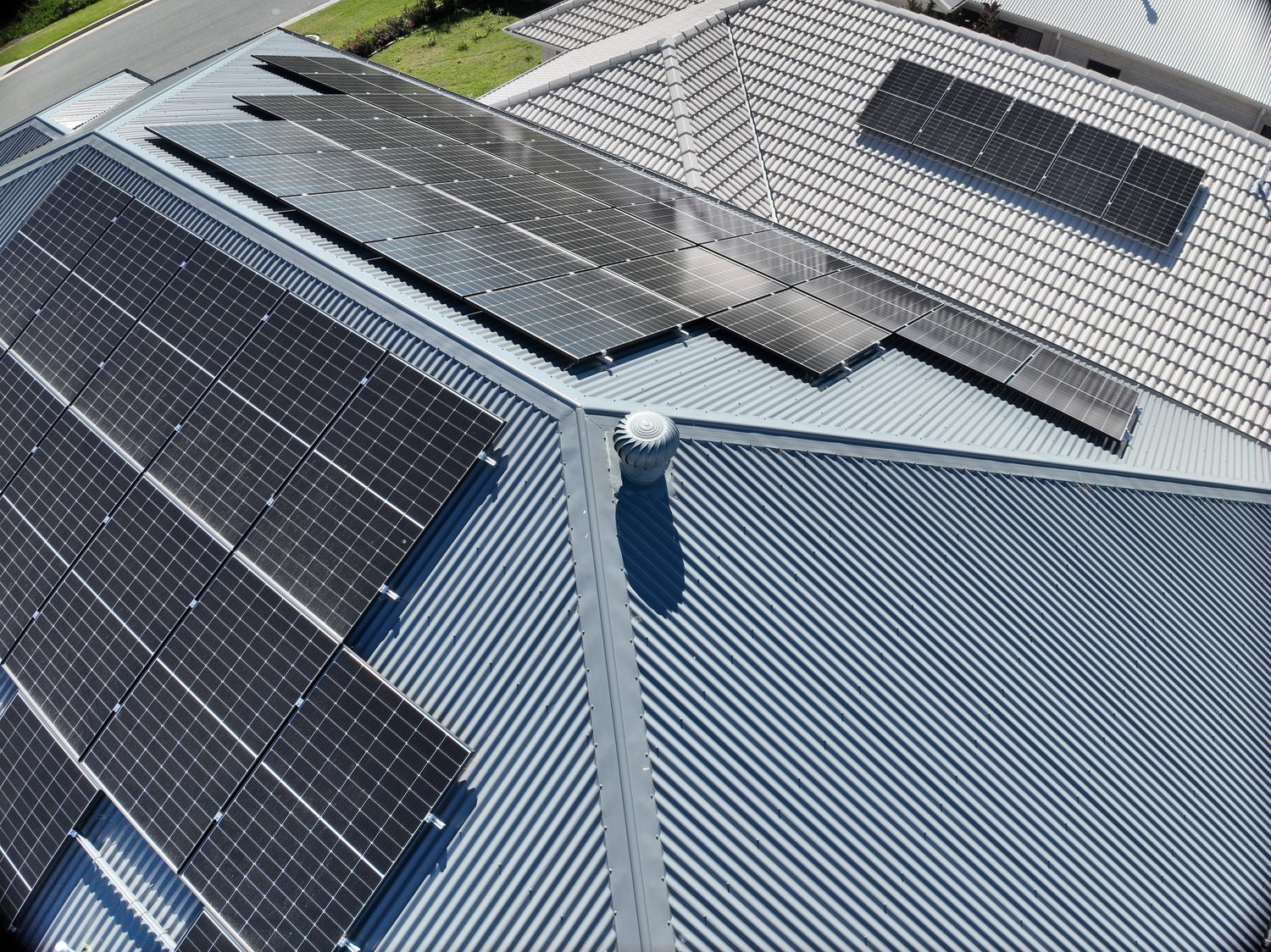
Drone roof and facade inspections in Brisbane
Every roof plane and every elevation, captured from a few metres away — no scaffold, no rope access crew, no elevated work platform, and usually no closure below.
A drone roof or facade inspection records every agreed elevation from a few metres away, with no scaffold, no rope access, no EWP and usually no closure below. Each item of note comes back as a pair of frames from one hover position: a wide frame for context, a tele frame for the detail. Flown under CASA ReOC #9398 with $28M public liability and the controlled-airspace approvals Brisbane buildings need. Indicative pricing, reviewed August 2026 and exclusive of GST — commercial and industrial roofs roughly $600–$1,500, buildings and facades roughly $1,000–$3,000. It is a visual record rather than a 3D model; where defects have to be counted and tracked on a model, that is AI defect detection.
The access problem, removed
The expensive part of a roof or facade condition inspection has never been the looking. It is the getting there: scaffold hire, an EWP that cannot reach the third elevation, a rope access crew booked three weeks out, a footpath closure, and a day of everybody else's work stopped so one person can get within arm's reach of the cladding. A drone removes that whole layer. The aircraft holds position a few metres off the surface and works the elevation methodically, while the building carries on underneath it.
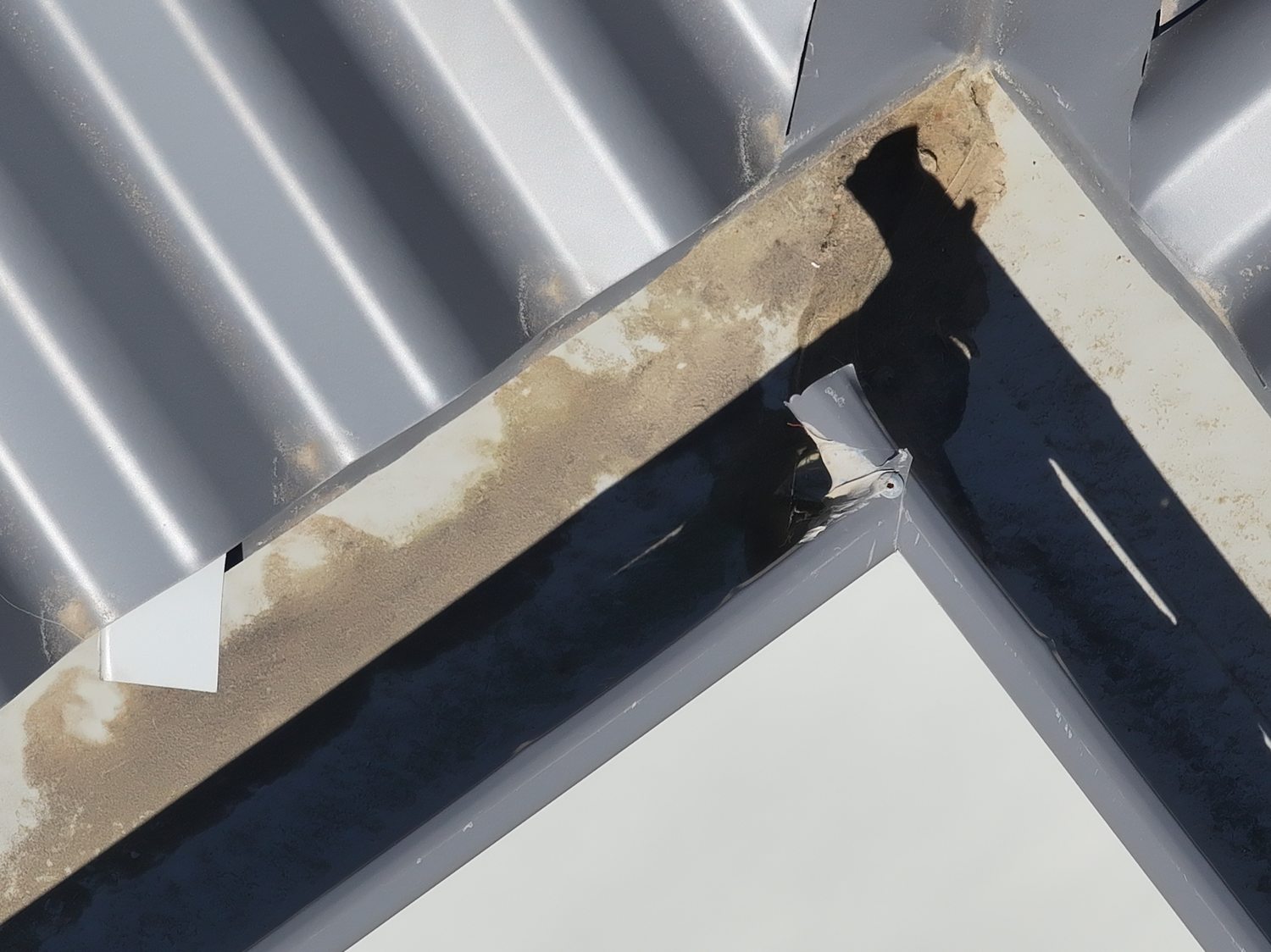
Capture is deliberately paired. From a single hover position the wide camera takes a context frame showing where the item sits on the structure, then the 168 mm tele camera resolves the detail itself. An onboard laser rangefinder ranges each imaged surface as it goes. So every detail frame carries a position for the defect itself, not just for the aircraft, and the same spot can be relocated on a later flight.
 EAVES MITRE — TELE DETAIL
Context and detail, from the same hover
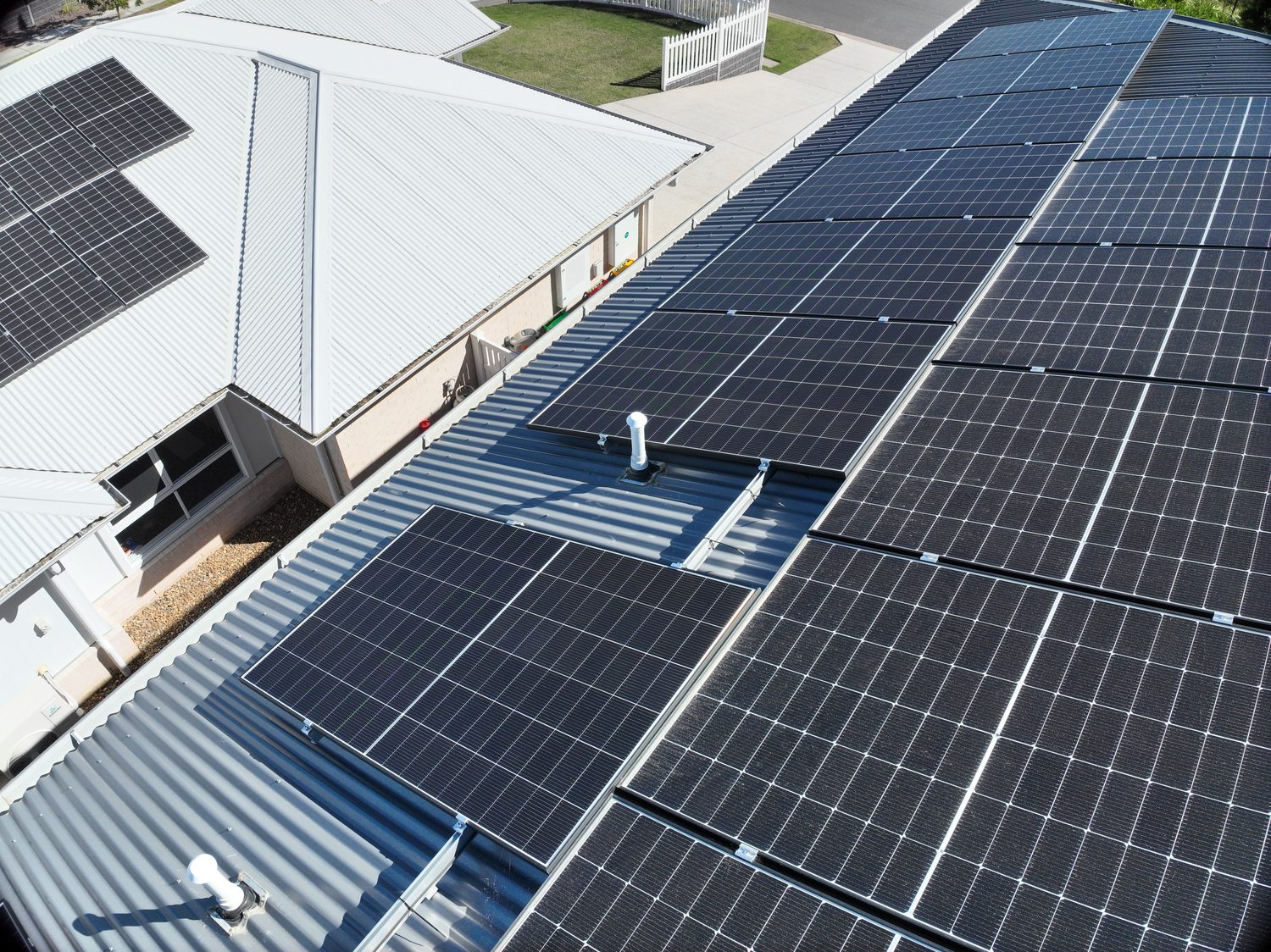
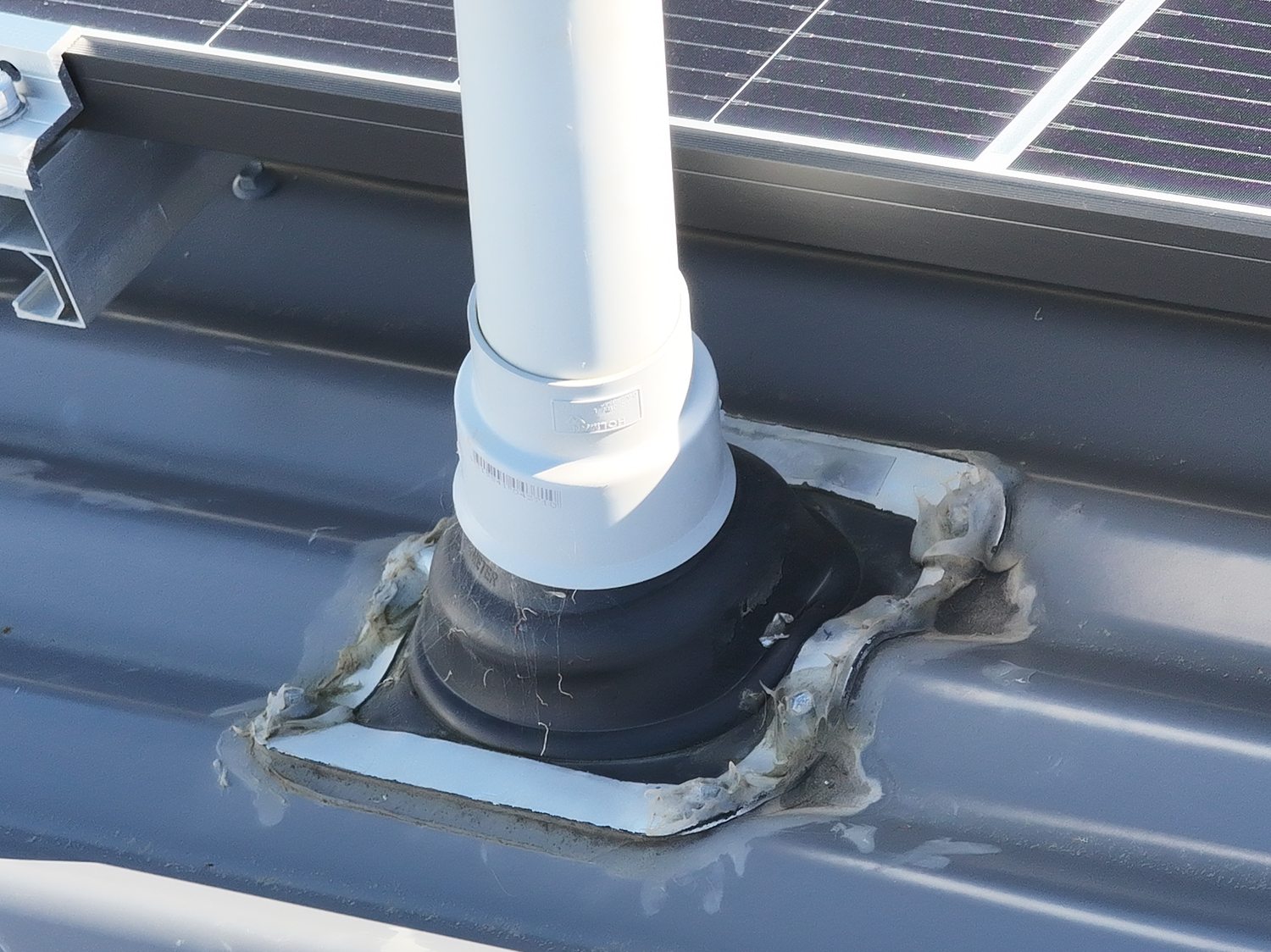
Both frames below were taken from one position, seconds apart, on a South East Queensland residential roof. The left frame places the penetration on the roof plane. The right frame is the same penetration through the tele lens, close enough to read weathered sealant beads and debris on the collar without anyone setting foot on the sheeting.
 CONTEXT FRAME
 DETAIL — SAME HOVER
What the job actually involves
| Access equipment required | NONE · NO SCAFFOLD, ROPE ACCESS OR EWP |
|---|---|
| Capture | PAIRED WIDE + 168 MM TELE, ONE HOVER |
| Defect positioning | ONBOARD LASER RANGEFINDER, PER FRAME |
| Review | LIVE DURING FLIGHT, OR AFTERWARDS |
| Written report | ITEMISED REGISTER, ON REQUEST |
| Commercial & industrial roofs | ~$600–$1,500 EX GST |
| Buildings & facades | ~$1,000–$3,000 EX GST |
What lands in the report
Where a written report is wanted, it is built as an itemised register rather than a folder of photos. Every recorded item carries an ID, the element it sits on, a plain-language description of what is visible, and its location on the structure. Both frames sit with it, along with the capture metadata behind them. That is what lets an observation be checked back against the source imagery, or re-flown later and compared side by side.
The descriptions stay descriptive on purpose. They are labels for what appears in the frame — not engineering classifications, condition ratings or statements of structural adequacy. A visual survey also cannot speak to section loss, to a fixing under a capping, or to anything else concealed. Assessment and remediation decisions stay with you and your engineers, which is where they belong. Being clear about that boundary is what makes the record usable as evidence.
ROOF PLANES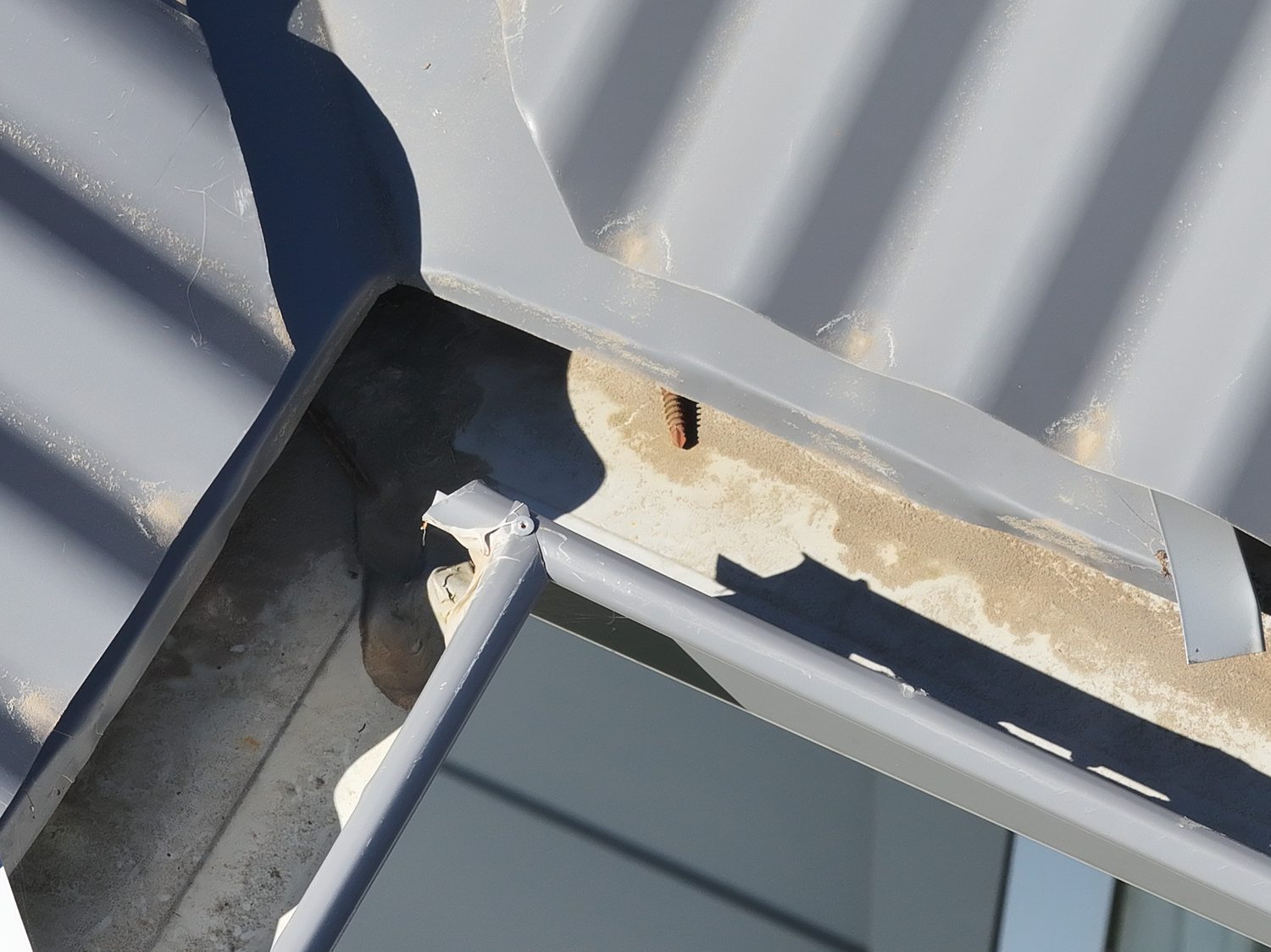 LOOSE RUSTED SCREW
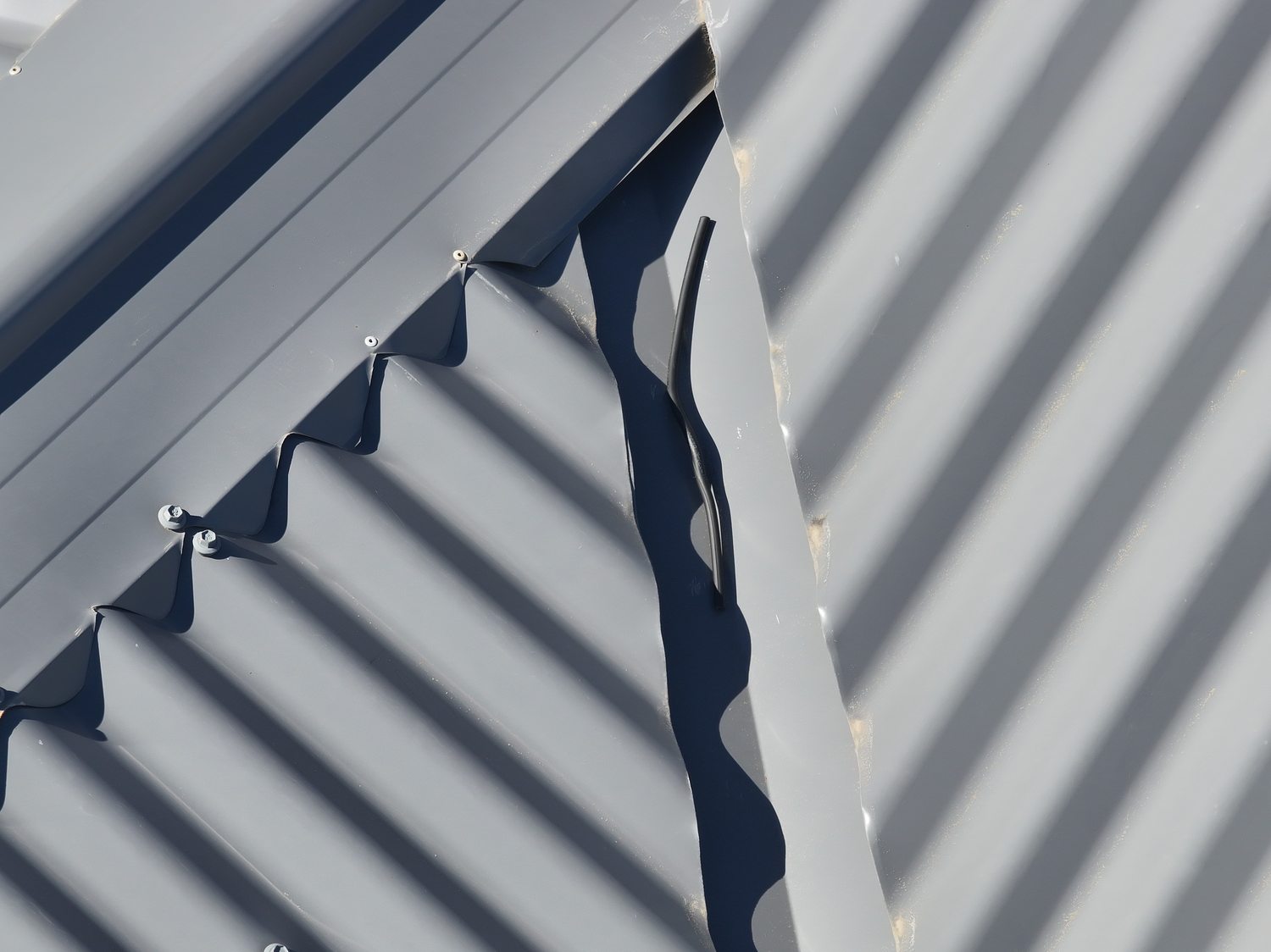 LEFTOVER SCRAP CABLE
A visual inspection is not a 3D model
What you get here is a record of how the asset looks, read by a person. That can happen live over video while the aircraft is still up, or afterwards with your inspector or a third-party witness. There is no model behind it, and that is deliberate: it costs less because it does less. The moment findings have to be counted, pinned to geometry and compared against the last round, AI defect detection is the right service instead. That one resolves cracking to 0.2 mm and delivers a geolocated PDF register with the 3D model to hang it on, every detection manually verified.
Assets this is built for
Commercial & industrial roofs
Sheet condition, flashings, penetrations, gutter lines, rooftop plant and solar arrays across large-footprint roofs — and nobody walking a fragile surface to get there.
Building facades
Cladding, sealant lines, spalling, staining and water ingress paths across every elevation, including the faces an EWP cannot reach.
Strata, body corporate & dilapidation
Condition records for common-property roofs, and before-and-after documentation around adjacent works, captured consistently enough to compare one round with the next.
Roofs and facades are one part of a wider inspection practice. The same method covers bridges, towers and dams under close visual inspection, and drone inspections across Brisbane sets out the operating area. Structures outside South East Queensland are quoted as a single fixed price for a scheduled regional job.
Straight answers, before you ask
Q/01How much does a drone roof inspection cost in Brisbane?
As a 2026 guide, exclusive of GST: commercial and industrial roof inspections run roughly $600 to $1,500, and buildings and facades roughly $1,000 to $3,000. A single small asset can start from a few hundred dollars. What moves the number is height, the number of elevations, the airspace the building sits in, and whether the area below has to be managed. A written fixed price comes back within one business day.
Q/02Do you need scaffold, rope access or an EWP?
No. That is the point of the method. Every elevation is captured from a few metres away by an aircraft, so there is no scaffold to erect, no rope access crew to schedule and no elevated work platform to hire or position. In most cases the area below stays open, because the work happens in the air rather than against the face of the building.
Q/03What do I actually get from a drone roof or facade inspection?
Each item of note is recorded as a pair of frames from one hover position. The wide frame shows where it sits on the structure; the tele frame resolves the detail. Every detail frame also carries a laser-rangefinder position for the surface itself, so it can be found again and re-shot next inspection. A written report with an itemised register is available on request, and your inspector or a third-party witness can watch the flight live over video rather than wait for it.
Q/04Can you inspect a building in the Brisbane CBD?
Yes, with the airspace authorisation arranged first. Much of greater Brisbane sits under controlled or restricted airspace, and routine city work clears in near real time through the automated airspace authorisation service, which is open to CASA ReOC holders only. Flying over people or above 120 m sits outside that path and needs a Form 101-09 lodged at least 60 days ahead.
Q/05What is the difference between this and AI defect detection?
Both produce a written register. The difference is how the findings are found, and what they are pinned to. A visual inspection is read by a person, and each item is positioned against the structure by laser rangefinder. AI defect detection runs automated detection across the capture, resolves cracking to 0.2 mm and pins every finding to a 3D model, with the register issued as a geolocated PDF and every detection manually verified. Choose that one when findings have to be counted and compared against the last round rather than simply seen.
How this stacks up on cost and lead time against rope access and EWPs is worked through in the drone vs rope access vs EWP guide.
Scope this for your building
Send the address, the elevations you need covered and what the inspection has to support. A scoped method and fixed price come back within one business day.
HARRY BILLING — CHIEF REMOTE PILOT
0411 445 458
[email protected]
CASA ReOC #9398 · $28M PUBLIC LIABILITY